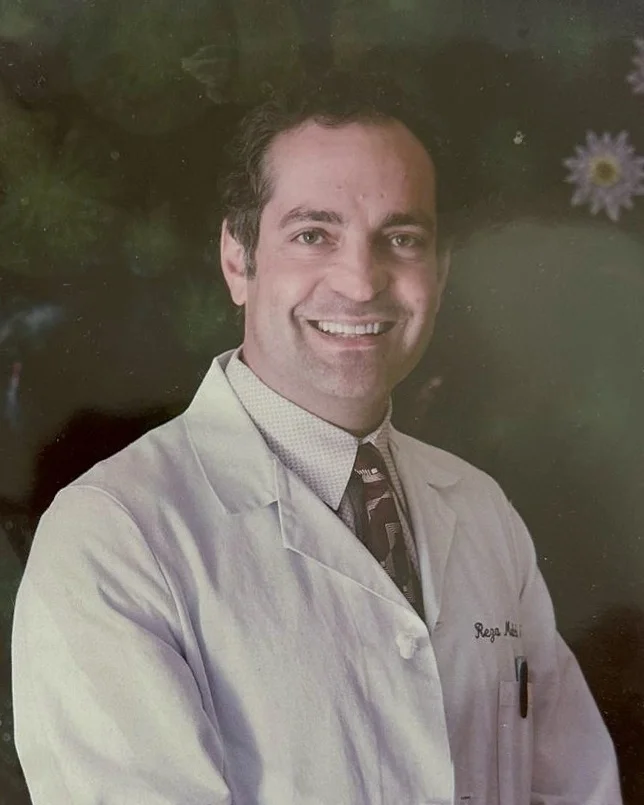
Treats an enlarged prostate (BPH) by blocking the tiny arteries that feed it, so it shrinks. No incisions, nothing inserted through the urethra, and a lower risk to sexual function than TURP. Outpatient, under local anesthesia with light sedation. Most men are back to normal within days. Prostate arteries are often under 1 mm wide, so Dr. Malek uses the same microcatheters and techniques he relies on in brain procedures. Technical success with experienced operators is typically above 90%, and in published series 80–90% of appropriately selected men report significant improvement at one year.
Learn moreFor men who can’t urinate without a Foley catheter because the prostate is too large, including elderly and nursing-home patients who aren’t candidates for surgery. Blocking the prostate’s blood supply shrinks the gland, and many men can have the catheter removed and urinate on their own again. Outpatient, under local anesthesia with light sedation. Dr. Malek considers catheter-dependent men among the best candidates for PAE. Before treatment he checks that the bladder muscle still works, so patients know their realistic chances in advance.
Learn moreTreats bleeding internal hemorrhoids by blocking the rectal arteries that feed them. Unlike hemorrhoid surgery, there’s no cutting near the anus and no weeks of painful healing. Outpatient, under local anesthesia with light sedation. Most patients return to normal activity in 1–2 days.
Learn moreShrinks uterine fibroids by cutting off their blood supply, easing heavy bleeding and pelvic pain while keeping the uterus. No incision, and recovery takes about a week instead of 6–8 after a hysterectomy. No general anesthesia. Same-day discharge or a one-night stay. Dr. Malek has performed UFE since the late 1990s, when the treatment was first emerging.
Learn moreTreats chronic pelvic pain in women caused by enlarged, faulty veins in the pelvis, much like varicose veins in the legs. Pain is often worse after standing for a long time, during periods or after intercourse. The faulty veins are closed from inside with tiny coils or a sealing agent, delivered through a small puncture. No incisions. Outpatient, under local anesthesia with light sedation. Most women return to normal activity within a few days.
Learn moreGenicular Artery Embolization (GAE)
Relieves knee osteoarthritis pain by blocking small abnormal blood vessels that drive inflammation in the joint lining. An option for people who aren’t ready for, or can’t have, a knee replacement. Outpatient, under local anesthesia with light sedation. Patients walk the same day. GAE is a newer treatment: early studies show meaningful pain relief for many patients, and longer-term data is still being collected.
Musculoskeletal Embolization (MSK): Frozen Shoulder & Tendon Pain
Targets the abnormal blood vessels behind chronic joint and tendon pain, such as frozen shoulder (adhesive capsulitis), tennis elbow, plantar fasciitis or other tendon problems, when physical therapy and injections haven’t helped. No surgery or incisions. Outpatient, under local anesthesia, about an hour. Most people resume daily activities the next day. Still an emerging treatment.
Hip Embolization
Targets the abnormal blood vessels that drive inflammation and pain in hip osteoarthritis, using the same approach as knee embolization. An option for people with persistent hip pain who aren’t ready for, or can’t have, a hip replacement. Outpatient, under local anesthesia with light sedation. Results so far are early but encouraging, and research is ongoing.
Peripheral Artery Disease (PAD) Treatment
Restores blood flow to the legs when arteries are narrowed or blocked by plaque, a common problem in smokers and people with diabetes. Balloon angioplasty and stents open the artery from inside through a small puncture, instead of open bypass surgery. Usually outpatient, under local anesthesia with light sedation. Dr. Malek advises medical device companies developing new treatments for peripheral artery disease.
Aortic Aneurysm & Dissection Repair (EVAR)
Repairs an abdominal aortic aneurysm or a complex aortic dissection from inside the artery. A stent-graft is placed through small punctures in the groin instead of open abdominal surgery. Typically a 1–2 day hospital stay rather than a week or more, with a much faster recovery.
Varicose Vein Treatment
Closes damaged leg veins that cause bulging varicose veins, aching and swelling, using medical adhesive (VenaSeal) or heat ablation through a single needle stick. No vein stripping surgery. Done in the office under local anesthesia, and you walk out right away. Dr. Malek is a member of the American College of Phlebology and was an advisor and investor in Sapheon, the company that developed VenaSeal.